Venezuela Earthquake Disaster Sparks National Emergency and Global Humanitarian Response
Keywords: Venezuela earthquake, disaster relief, emergency response, humanitarian aid, seismic risk, reconstruction, international support
Introduction
Venezuela is grappling with one of the most serious natural disasters in its modern history. On the evening of the 24th local time, two powerful earthquakes struck the country in rapid succession, causing catastrophic destruction in the capital Caracas and several other regions. As of the 26th, the acting president Rodríguez announced that the death toll had reached 589, with 2,980 people injured. With rescue operations still underway and the full scale of the damage continuing to unfold, Venezuela has entered a nationwide emergency response phase.
The earthquake has not only shaken the country physically, but also exposed the fragility of infrastructure, emergency preparedness, and disaster resilience in a nation already facing severe economic and social pressures. At the same time, the tragedy has drawn swift international concern, with the United Nations, neighboring countries, and a number of other states mobilizing assistance. China also expressed deep condolences and pledged concrete support for relief and post-disaster reconstruction.
A Rare and Devastating Double Mainshock
According to seismic data released by the U.S. Geological Survey, the first earthquake struck near Montalván at around 6 p.m. local time on the 24th, measuring 7.2 in magnitude. Less than a minute later, a stronger 7.5 magnitude quake followed, with a shallow focal depth of only 10 kilometers. This unusual “double mainshock” sequence magnified the destructive impact, leaving little time for structures or emergency systems to absorb the shock before being hit again.
The tremors caused buildings to collapse in Caracas and other urban centers, trapping residents under rubble and turning streets into scenes of chaos. The worst-hit state, La Guaira, recorded the highest number of casualties and remains the epicenter of the humanitarian crisis. Initial reports underestimated the scale of the tragedy, but the death toll rose sharply as rescue teams continued to recover victims from collapsed structures. Officials noted that thousands of medical personnel, including more than 1,200 doctors, had been deployed nationwide to support emergency operations.
The initial damage assessment also points to broad destruction across key public facilities. At least 346 buildings reportedly sustained serious damage, while another 250 residential and commercial structures were lightly damaged. Eight public hospitals were affected, some of which had to be evacuated urgently. Caracas International Airport was closed after severe structural damage, while parts of the capital suffered water and electricity outages, mobile communications disruptions, and school closures.
Rescue Operations and the Human Cost
The immediate priority has been the search for survivors. Acting President Rodríguez said rescuers were racing against time to locate people trapped under collapsed buildings. In many areas, rescue workers have been digging through debris with heavy tools and, in some cases, by hand, as desperate families search for missing relatives.
The human toll is not limited to those killed or injured. Entire communities have been displaced. In La Guaira, many residents spent their second night outdoors, unwilling to return to homes that had developed visible cracks and fearing further collapse amid ongoing aftershocks. Some families took refuge on highway medians or in public parks, while volunteers scrambled to provide food, blankets, and basic supplies.
Grassroots solidarity has emerged quickly. Hundreds of donation points have been established, and local groups have used mobile applications to report missing persons and areas in need of urgent assistance. These spontaneous efforts reflect both the resilience of the Venezuelan people and the inadequacy of formal systems to meet the scale of the emergency alone.
At the same time, the disaster has had an international dimension. According to the Chinese Embassy in Venezuela, two Chinese nationals were confirmed dead as of the afternoon of the 25th local time. China’s Foreign Ministry said its embassy is making every effort to verify the safety of Chinese citizens in the country and to provide necessary assistance, while also warning Chinese nationals to remain alert to secondary hazards such as aftershocks, landslides, and damaged infrastructure.
Why the Damage Was So Severe
Seismologists note that the destruction was intensified by a combination of geological and structural factors. Venezuela lies along the boundary between the Caribbean Plate and the South American Plate, making the region inherently vulnerable to earthquakes. However, this event was especially dangerous because of its shallow depth and the unusual back-to-back mainshocks.
Experts explained that the first quake likely altered stress along a nearby fault just a few miles away, triggering the stronger second quake only 39 seconds later. This kind of sequence is particularly destructive because buildings damaged by the first shock often have no time to stabilize before the second impact. Even structures that remain standing initially may suffer critical weakening and collapse moments later.
In addition, many buildings in affected regions reportedly have limited seismic resistance. In a country where infrastructure maintenance has long been uneven, and where urban expansion has often outpaced enforcement of construction standards, the earthquake exposed structural vulnerabilities that turned a geological event into a humanitarian catastrophe.
Some experts have described this event as one of the most severe earthquakes in the country in more than a century. The U.S. Geological Survey even issued a red alert, initially warning that the death toll could potentially reach tens of thousands based on early modeling. While official figures remain far lower, the warning underscored the seriousness of the disaster and the possibility that the final casualty count may still rise as search efforts continue.
A Country Under Strain, Yet Mobilized
The Venezuelan government has activated a nationwide emergency response mechanism. Authorities have deployed medical teams, security forces, and military units to the hardest-hit areas. Interior, Justice and Peace Minister Cabello described the event as an unprecedented earthquake, emphasizing that all state departments were being mobilized to prioritize the rescue of survivors.
This emergency response comes at a time of great institutional strain. With communication networks disrupted, roads damaged, and public facilities compromised, coordinating relief efforts is a major challenge. Yet the government has sought to keep both domestic and international channels open. The National Assembly’s leadership said an air corridor had been established to allow foreign rescue teams to enter the country and coordinate with Venezuelan responders.
The scale of the disaster also highlights the need for long-term preparation rather than only crisis response. Earthquake relief is not limited to immediate rescue. It requires hospital capacity, shelter management, logistics, psychological support, public health protection, and above all, a reconstruction strategy that can restore trust in infrastructure and institutions.
Global Solidarity and China’s Response
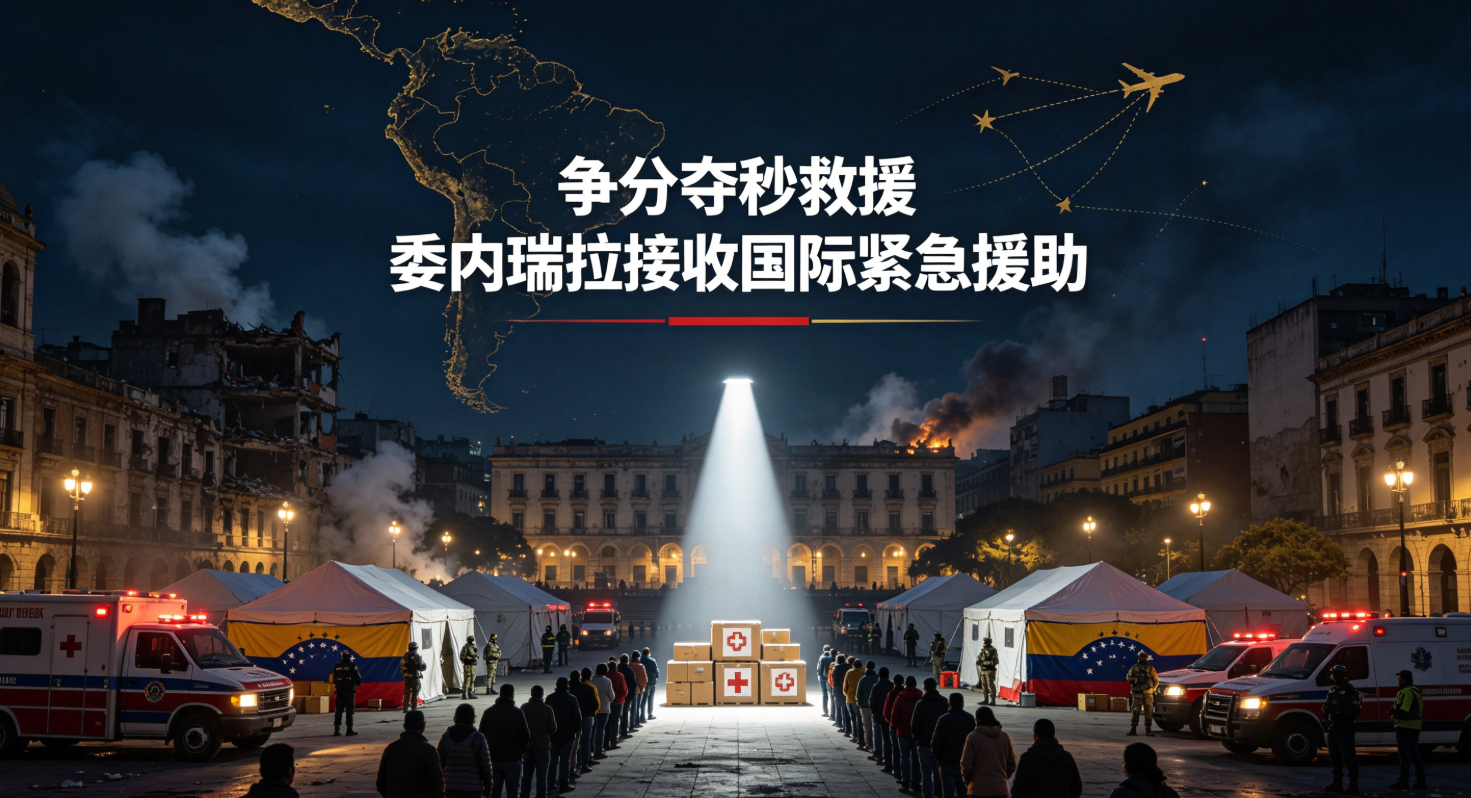
The earthquake has prompted swift international solidarity. The United Nations stated that its agencies in Venezuela were coordinating with the government and partners to mobilize resources for relief operations. Secretary-General António Guterres expressed deep sorrow over the loss of life and extensive damage, and welcomed international assistance.
Several countries have already committed personnel and supplies. Brazil announced a field hospital as well as firefighters, rescue specialists, and communications experts. Colombia sent more than 60 rescuers. El Salvador dispatched 300 rescue and medical personnel along with 50 tons of aid. Cuba pledged medical assistance, while Mexico deployed doctors and rescue workers with equipment and medical supplies. Iran also expressed its readiness to provide any necessary support.
China responded quickly as well. On the 26th, President Xi Jinping sent a message of condolence to Acting President Rodríguez, stating that he was deeply saddened by the severe casualties and property losses caused by the earthquake. He extended sincere condolences to the victims and sympathy to the injured and bereaved families, and said that China would provide assistance for rescue operations and post-disaster reconstruction. The Chinese government and the Red Cross Society of China have also committed emergency humanitarian aid.
This response reflects a broader principle: in the face of major natural disasters, humanitarian assistance should transcend geography and politics. The speed with which the international community has responded demonstrates the importance of solidarity when lives are at risk.
Conclusion: Rebuilding Lives and Restoring Confidence
Venezuela now faces a long and difficult road. Rescue teams must continue searching for survivors, medical workers must treat thousands of injured people, and authorities must restore essential services while preparing for the possibility of more aftershocks. Beyond the immediate emergency, the country will need a comprehensive reconstruction effort that addresses housing, hospitals, transportation, communications, and disaster preparedness.
The earthquake is a tragic reminder that natural disasters become far more deadly when they strike vulnerable societies with weak infrastructure and limited resilience. It is also a reminder that preparedness, public investment, and international cooperation can make the difference between crisis and catastrophe.
As Venezuela mourns its dead and supports the wounded, the world is watching and offering help. With unified efforts at home and abroad, the country may yet overcome this ordeal and begin the process of rebuilding not only its cities, but also the confidence and security of its people.