Supreme Court Immigration Rulings Reshape U.S. Asylum Policy and Trigger Fierce National Debate
Keywords: U.S. Supreme Court, immigration policy, Temporary Protected Status, asylum, border enforcement, deportation, executive power, humanitarian protection, legal challenge, U.S. politics
Introduction
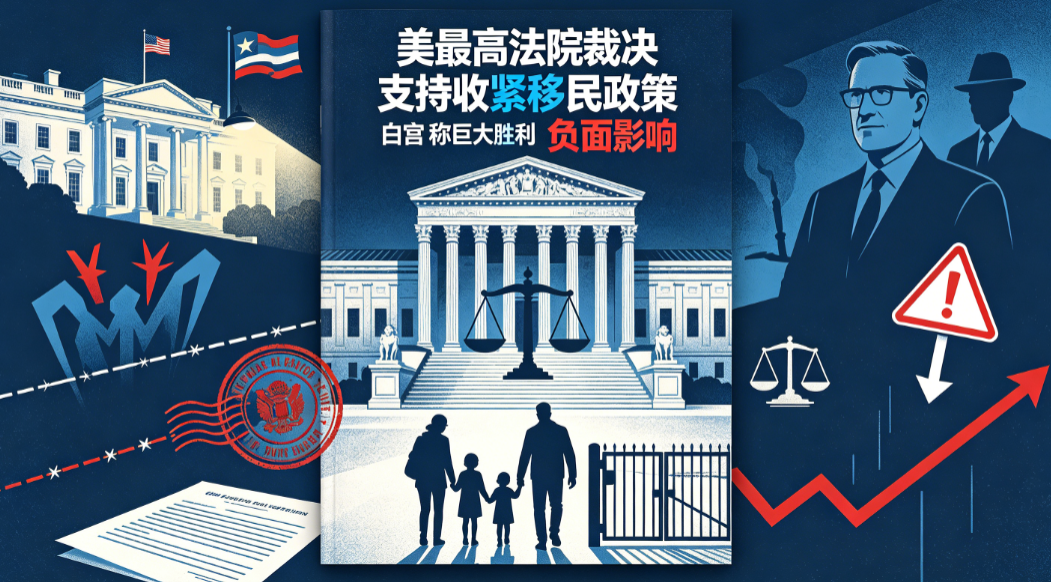
On June 25, the U.S. Supreme Court issued two major rulings that could fundamentally alter the country’s immigration landscape. Together, the decisions give the federal government greater authority to end certain immigration protections and to enforce policies that prevent asylum seekers from reaching U.S. territory. The White House immediately hailed the outcome as a “huge victory,” while critics warned that the rulings could lead to more deaths, deepen legal uncertainty, and mark one of the darkest moments in the modern history of American law.
At the center of the controversy is a broader question that has defined U.S. politics for years: how far can the government go in restricting migration while still preserving the nation’s humanitarian obligations and legal commitments? The Court’s answer, at least in these cases, appears to favor expanded executive power and tighter border control. But the consequences may extend far beyond the courtroom, affecting hundreds of thousands of people already living in the United States, as well as many more who hope to seek protection there.
Two Rulings with Far-Reaching Consequences
According to reports, one ruling allows the Trump administration to end Temporary Protected Status, or TPS, for tens of thousands of immigrants from countries including Haiti and Syria. TPS has long served as a humanitarian safeguard for people whose home countries are experiencing war, natural disaster, or severe instability. It permits eligible individuals to live and work in the United States temporarily without fear of deportation.
The second ruling supports the government’s ability to implement a so-called “metering” or “limit-flow” policy at the southern border. Under this approach, immigration authorities can prevent asylum seekers from physically entering U.S. territory before they submit claims, effectively reducing the number of applications that officials must process. The policy was originally associated with the Obama administration, expanded under Trump, and later ended during the Biden presidency. With the Supreme Court’s latest decision, the policy has regained legal support, giving the administration another tool to restrict entry.
Taken together, the two decisions create a path for the government to remove more than one million migrants from the country and to block many others from entering in the first place. That scale alone underscores the significance of the rulings: they are not simply administrative adjustments but a potential restructuring of how the United States defines access to safety, residence, and legal protection.
Temporary Protected Status and the Humanitarian Stakes
Temporary Protected Status is designed for precisely the kinds of crises that make return unsafe. When political violence, earthquakes, floods, or civil collapse strike a country, TPS offers a temporary answer to a difficult reality. It is not a pathway to citizenship, but it does provide a vital legal bridge for people who cannot safely go home.
The administration had sought to terminate TPS for 13 of the 17 countries originally approved for the program, including Haiti, Syria, and Venezuela. Those efforts were challenged in court, and multiple federal judges had previously blocked the government from moving forward. The Supreme Court’s intervention now clears the way for those terminations to proceed.
For the people affected, this is not an abstract policy issue. TPS holders often have U.S.-born children, long-term jobs, mortgages, and deep community ties. Many have lived in the United States for years or even decades. Ending their protection can abruptly strip them of work authorization and expose them to deportation, even when their home countries remain dangerous or unstable.
Critics argue that this creates a profound contradiction: the United States has benefited from the labor, taxes, and community contributions of TPS holders, yet now appears prepared to treat them as disposable once political pressure shifts. A recent report cited by observers noted that TPS holders contribute an estimated $29 billion annually to the U.S. economy, highlighting the material consequences of mass removal.
The Border “Limit-Flow” Policy and the Asylum System
The second ruling is equally consequential, though it operates differently. The border “metering” policy allows officials to stop asylum seekers before they physically enter U.S. soil. Because asylum law traditionally depends on whether an individual is present at or within the border, the policy effectively narrows access by controlling the point of entry.
Supporters of the policy argue that it is necessary to manage an overwhelmed immigration system and reduce the backlog of asylum claims. They contend that the United States cannot process unlimited arrivals and that border control is essential to national sovereignty and public order. From this perspective, the policy is a pragmatic response to operational strain.
Opponents, however, see something more troubling. They argue that by preventing vulnerable people from even reaching the legal threshold for asylum, the government is undermining the very structure of protection law. In practice, this can leave asylum seekers stranded in dangerous conditions, unable to wait safely or present their case. For those fleeing violence or persecution, delays can be deadly.
This concern was reflected in the sharply worded dissent from Justice Sonia Sotomayor, who warned that the majority’s decision would encourage unlawful crossings and that it would likely result in more deaths. Her warning captures the central moral tension surrounding border enforcement: policies designed to deter entry may also increase the risks faced by those with the least protection.
A Clear Ideological Divide on the Supreme Court
The rulings were both decided by a 6–3 conservative majority, with the Court’s three liberal justices in dissent. That alignment reflects a broader pattern the Court has shown in recent months, with multiple high-profile decisions split along ideological lines. Critics say the recurring 6–3 outcomes reveal not only a legal philosophy but also a deeper shift in the balance of power between the executive branch and the judiciary.
Justice Alito, according to commentary in U.S. media, showed hostility toward immigrants whose lives are now likely to be disrupted. Justice Sotomayor’s dissent went further, suggesting that the majority had ignored legal history and context in favor of a more permissive approach to executive restriction.
The growing number of 6–3 decisions has also fueled concern that the Court is increasingly unwilling to act as a meaningful check on presidential authority, particularly when immigration enforcement is framed as a matter of border security. For supporters of the rulings, this may be seen as judicial restraint. For critics, it looks like surrender.
Political and Legal Reactions
The reaction to the rulings was immediate and deeply polarized. The White House celebrated the outcome as a major victory, and Republican lawmakers along with anti-immigration groups welcomed the Court’s willingness to support stronger border controls and the termination of humanitarian protections.
On the other side, immigrant rights organizations, civil liberties advocates, dozens of activist groups, and Democratic lawmakers denounced the decisions as cruel and catastrophic. Representative Ramirez and others argued that the government and its allies on the Supreme Court were rejecting internationally recognized human rights norms and advancing an authoritarian, white supremacist political agenda at home. Whether one accepts that characterization or not, it is clear that the rulings have intensified a political struggle already central to the 2024 election cycle and beyond.
Legal scholars have also expressed alarm. Georgetown University professor David Vladeck told CNN that the latest rulings suggest the Court may have only limited ability to constrain the executive branch. In his view, the judiciary may in effect be abandoning its role altogether. That is a serious charge, but it reflects the frustration of many legal observers who believe the Court is no longer serving as a neutral arbiter, especially in cases involving vulnerable populations.
Economic and Social Implications
Beyond the legal and political debate lies a practical question: what happens when a large protected population loses status? For families, the answer may mean job loss, separation, detention, or deportation. For employers, especially in industries that rely on immigrant labor, it may mean staffing disruptions and economic instability. For communities, it may mean children losing parents, tenants losing homes, and local economies losing contributors.
TPS holders in particular have become embedded in many sectors of the American economy. They work in healthcare, construction, agriculture, service industries, and education. Removing them on a large scale would not simply enforce immigration law; it would likely unsettle labor markets and destabilize communities that have already integrated these residents into daily life.
There is also the reputational cost. The United States has long portrayed itself as a country that offers refuge to the persecuted. Policies that dramatically narrow access to asylum and terminate protections for people already living legally in the country can erode that image, both domestically and internationally. At a time when migration pressures are global, the U.S. response will be closely watched by allies, adversaries, and migrants themselves.
Conclusion
The Supreme Court’s two immigration rulings on June 25 are more than isolated legal decisions. They signal a major shift in how the United States may handle humanitarian protection, border enforcement, and executive authority in the years ahead. By allowing the government to end TPS for hundreds of thousands and to restrict asylum seekers before they reach American soil, the Court has handed the administration powerful new tools to reshape immigration policy.
Supporters call this a necessary correction that restores order at the border. Critics see a dangerous abandonment of legal and moral responsibility. What is beyond dispute is that the stakes are immense. Families, communities, and entire legal frameworks now face profound uncertainty. If these rulings become the foundation for broader action, the United States may soon witness one of the largest status revocations in its history—and a lasting transformation of its asylum system.
For now, the nation is left confronting a difficult question: when border control and human protection collide, what kind of country does America choose to be?