Title: Tensions in the Strait of Hormuz: A Drone Strike, Maritime Security, and the Fragile Politics of Passage
Keywords: Strait of Hormuz, Iran, drone strike, maritime security, International Maritime Organization, shipping lanes, Gulf security, U.S.-Iran tensions, GCC, freedom of navigation
Introduction
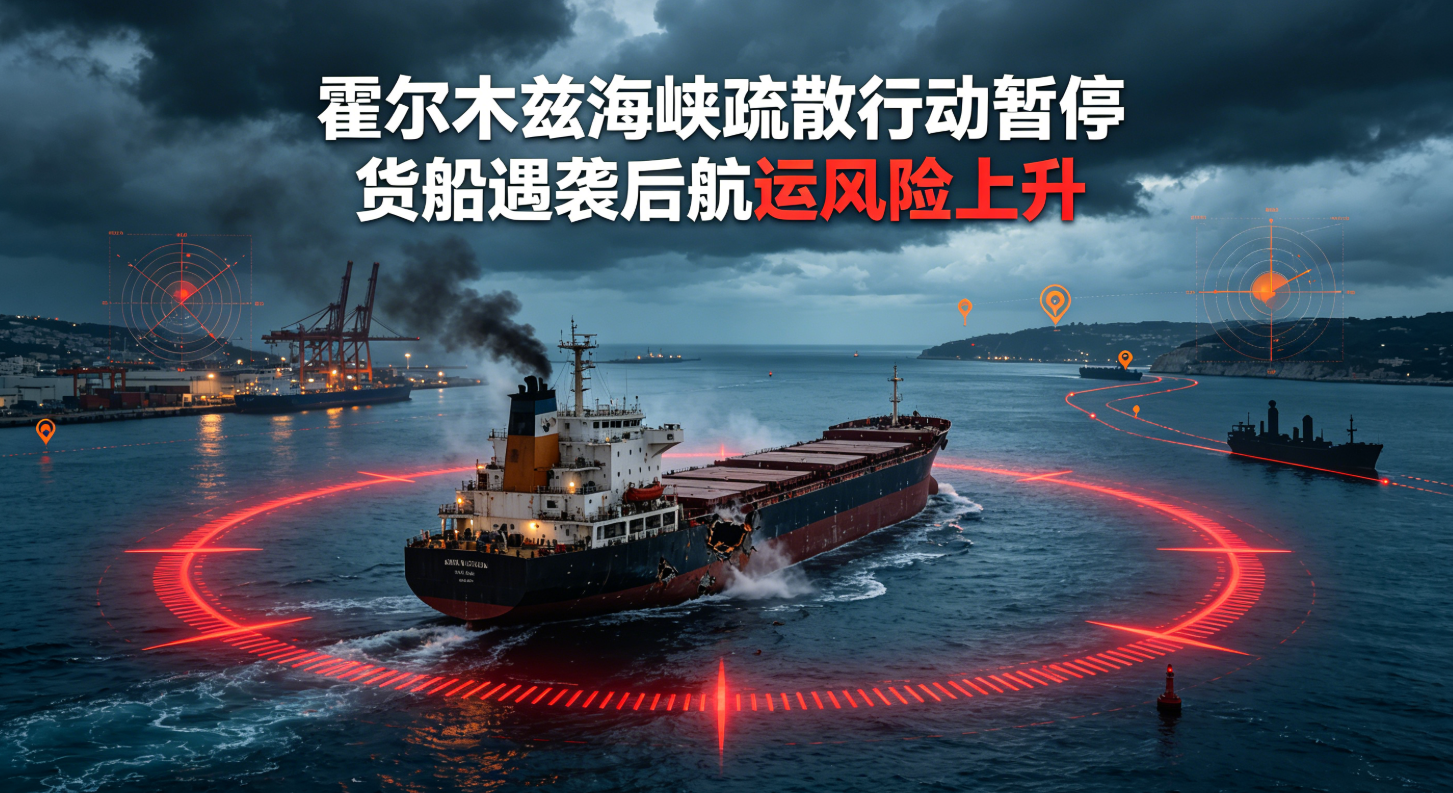
The Strait of Hormuz has once again become the center of global attention after reports that a Singapore-flagged cargo vessel was struck by an Iranian drone on July 25. While the attack did not cause casualties, its broader impact was immediate: shipping confidence weakened, an international evacuation effort was suspended, and renewed debate erupted over who can guarantee safe passage through one of the world’s most strategically important waterways.
For decades, the Strait of Hormuz has served as a critical artery for global energy and trade. Any disruption there can send ripples far beyond the Gulf, affecting oil markets, shipping costs, insurance premiums, and the geopolitical balance between Iran, the United States, and regional states. The latest incident is not merely a single maritime security event; it is a reminder of how fragile the current arrangements are, and how quickly a tactical confrontation can become a strategic crisis.
A Deliberate Strike and a Message of Control
According to The Wall Street Journal, two senior U.S. officials said the vessel was attacked by an Iranian drone while transiting the Strait. One American official stated that the drone first maneuvered westward before striking the ship, suggesting that the incident was intentional rather than accidental. The White House responded that it was aware of the reports and was investigating, while reiterating President Trump’s position that Iran cannot undermine free passage through the strait.
Tehran has not directly admitted responsibility for the attack. Yet Iran’s deputy foreign minister, Kazem Gharibabadi, used the social platform X on July 26 to insist that safe passage through the Strait of Hormuz cannot be guaranteed without coordination with Iran. That message was reinforced by the Islamic Revolutionary Guard Corps, which had already warned that any new transit route announced without consultation or coordination was “unacceptable and highly dangerous.”
The implication is clear: Iran continues to view maritime access in the strait not simply as a matter of navigation, but as a lever of political influence. By signaling that vessels outside an Iranian-approved framework may face consequences, Tehran is asserting that security in these waters cannot be separated from Iranian consent.
The IMO’s Evacuation Plan and Its Sudden Suspension
The attack also disrupted an international effort already underway to ease maritime congestion and protect stranded seafarers. On July 23, the International Maritime Organization announced a plan to evacuate mariners stuck in the Strait of Hormuz region. According to the organization, more than 11,000 seafarers were stranded there and could leave either through a northern route via Iranian waters or a southern route via Omani waters under U.S. supervision.
Reports suggest that on the morning of July 25, four ships, including the vessel that was later attacked, were following the IMO-designated route along the Omani coastline. The targeted ship was reportedly leading the group because it was moving fastest. Crucially, it had not received any Iranian radio warning and was not instructed to turn back.
After the attack, IMO Secretary-General Arsenio Dominguez announced the suspension of the evacuation plan pending further investigation. He noted that several ships had successfully departed since the plan was launched, but the attacked vessel had not been moving under the organization’s evacuation framework. Even so, the strike clearly undermined the sense of security required for the effort to continue.
The decision to pause the operation reflects a basic reality of maritime governance: evacuation and transit plans depend not only on route design, but on trust. Once that trust is damaged, even technically sound arrangements may become impossible to sustain.
Shipping Flows React to Renewed Risk
The strike came at a sensitive moment. According to shipping data company Kpler, about 70 vessels crossed the strait on July 24, more than double the previous day’s total, including 29 oil tankers. That increase suggested that market participants had begun to regain confidence after recent tensions.
However, the attack immediately reversed that trend. Reuters, citing vessel-tracking data, reported on July 26 that traffic through the strait had fallen again compared with earlier in the week. In practical terms, this means that a single incident was enough to disrupt a fragile recovery in confidence.
This is not surprising. Shipping companies operate on margins of risk and probability. Even when an attack causes no casualties, it still raises questions about insurance, route planning, and crew safety. A vessel owner may hesitate not because the threat is constant, but because the cost of being wrong is enormous. Every additional layer of uncertainty translates into higher insurance premiums and greater caution among ship operators.
The broader consequence is that security in the Strait of Hormuz is not only a military question. It is also a commercial one. If shipowners believe the route is becoming unpredictable, they may reroute traffic, delay departures, or seek additional protection. These responses can slow trade and raise costs across the global economy.
Competing Legal and Political Narratives
A deeper conflict is unfolding beneath the immediate security concern. The Strait of Hormuz is not governed by a universally accepted operational framework. Instead, it is shaped by overlapping claims, informal arrangements, and the competing interests of regional and extra-regional actors.
Iran argues that vessels must respect its rules and that the only authorized route is the one announced by the Iranian government. Its officials have warned that ships violating those procedures may be dealt with accordingly. The Tehran-backed position is that safe transit requires Iranian coordination and that outside actors cannot unilaterally create alternative lanes.
The United States and its partners take the opposite view. Washington has made freedom of navigation a central principle, arguing that no single state should be allowed to control passage through an international strait. The recent U.S.-Iran understanding reportedly required Iran to do its best to ensure safe transit for commercial shipping during a 60-day period in exchange for the U.S. lifting blockades on ports and halting sanctions on oil sales. That arrangement reflected an uneasy compromise rather than a durable settlement.
The problem is that such understandings are inherently fragile. They depend on continued restraint, credible monitoring, and mutual incentives. Once a drone strike occurs, each side accuses the other of bad faith, and the entire framework becomes harder to sustain.
GCC, Washington, and Tehran: A Broader Regional Contest
The security dispute also intersects with broader regional politics. On July 25, the foreign ministers of the Gulf Cooperation Council met with U.S. Secretary of State Marco Rubio in Manama and issued a joint statement reaffirming the importance of reopening the Strait of Hormuz. The statement opposed any attempt to levy transit fees or impose control over the strait and linked economic engagement with Iran to its compliance with the memorandum of understanding and a final agreement.
The Iranian Foreign Ministry strongly criticized the statement the next day, calling it interventionist, irresponsible, and provocative. Tehran rejected the claim that the United States is committed to Gulf security, describing that pledge as empty rhetoric. It argued instead that the American military presence is a burden on the region and a source of insecurity and division.
This exchange underscores a persistent dilemma. Gulf states want stability and uninterrupted trade, but they also rely on external security guarantees. Iran, meanwhile, resists any arrangement that appears to legitimize U.S.-led regional order. As a result, the Strait of Hormuz becomes not merely a shipping lane, but a symbolic front line in a wider struggle over sovereignty, influence, and regional architecture.
Why This Incident Matters Beyond the Gulf
The significance of this attack extends far beyond the immediate parties involved. The Strait of Hormuz is one of the most important chokepoints in the world, through which a substantial share of global oil and liquefied natural gas exports pass. Any meaningful disruption there can affect energy prices, supply chain planning, and international confidence in maritime security.
Moreover, repeated incidents gradually normalize risk. What begins as a one-off attack can evolve into a pattern of deterrence, signaling, and retaliation. Over time, that pattern can make commercial shipping more expensive and more politically sensitive. It can also increase the chance of miscalculation, especially when civilian vessels are operating in a militarized environment.
The latest episode shows how rapidly maritime security can degrade when political communication fails. An evacuation plan intended to protect seafarers instead became vulnerable to the very instability it sought to manage. This is a reminder that maritime governance in contested waters cannot rely on emergency responses alone; it requires sustained political restraint and clear lines of communication.
Conclusion
The drone strike on a Singapore-flagged cargo vessel in the Strait of Hormuz is more than a maritime incident. It is a warning that the region’s security arrangements remain precarious and that even limited attacks can have outsized strategic effects. The suspension of the IMO evacuation plan, the drop in transit traffic, and the renewed exchange of accusations between Iran, the United States, and Gulf states all point to the same conclusion: the Strait of Hormuz remains a flashpoint where commerce and geopolitics are inseparable.
If there is a lesson from this episode, it is that safe passage cannot rest on rhetoric alone. It requires practical coordination, credible restraint, and a political framework that all major stakeholders can accept, however reluctantly. Without that, the world will continue to witness a cycle in which each shipping crisis is treated as temporary, only to be followed by the next one.
In the end, the Strait of Hormuz is not just a narrow waterway. It is a test of whether regional powers can preserve global trade in a period of deep mistrust. For now, that test remains unresolved.