HK IPO: Strategic Value from First Public Fundraising to Secondary Financing Channels
Keywords: HK IPO, secondary financing channels, valuation rerating, cornerstone subscription, foreign-currency fundraising, small-cap financing
Introduction
In a company's capitalization journey, an IPO is not just the point of "going public"; it also marks the formal establishment of a capital-market relationship. For more and more companies seeking international expansion, diversified funding, and higher valuations, the significance of an HK IPO has long gone beyond the initial fundraising itself. It is not only the starting point for entering the public market, but also an important platform for opening follow-on financing channels, optimizing the capital structure, and enhancing brand influence.
Compared with simple equity financing, the value of the HK market lies in its combination of international reach, flexibility, and liquidity. For listed companies, HK can become an important ongoing financing tool; for newly listed companies, it offers multiple opportunities, including industry valuation rerating, cornerstone subscription, foreign-currency fundraising, and small-cap financing feasibility. In other words, an HK IPO is not the end of financing, but the starting point for a higher-level capital operation system.
1. The core value of an HK IPO: not just "listing," but a "financing platform"
Many companies planning to go public focus mainly on offer size, price range, and listing timing. However, truly mature capital management should treat an IPO as the first step in a long-term financing system. The HK market has high international visibility and strong regulatory compatibility, enabling companies to connect continuously with capital from both inside and outside the market after listing, while leaving room for follow-on offerings, placements, convertible bond arrangements, and strategic investment.
From an operating perspective, IPO proceeds are usually used for capacity expansion, R&D investment, channel building, M&A integration, and debt optimization. But from a capital-market perspective, equity securitization after listing brings more stable financing expectations and a richer set of financing tools. Once a company builds a strong market image, delivers earnings, and maintains good investor relations, it has a better chance of securing lower-cost and more efficient refinancing support later on.
Therefore, the real importance of an HK IPO is not simply "raising one round of money," but giving the company a sustainable, scalable, and international capital channel.
2. Secondary financing channels: an extension of capital operations after listing
The reason HK IPOs are so valued is largely because they provide companies with secondary financing channels. A secondary financing channel means that after completing an initial public offering, a company can still raise funds through the public market to support business expansion and strategic upgrades. This is especially important for growth companies.
First, public-market financing is highly efficient. After listing and building a certain level of trading activity, a company can quickly raise funds through placements, rights issues, convertible bonds, and other methods, avoiding the time cost and valuation friction of repeated private negotiations. Second, secondary financing helps form a capital loop: the initial listing solves the "entry" problem, while follow-on financing solves the "expansion" problem, ultimately pushing the company from stage-by-stage development to scaled growth.
In particular, amid intensifying industry competition and faster technological iteration, companies often need continued investment. The value of HK as a refinancing platform is that it allows companies to replenish funds quickly when market conditions are favorable, seize the window for expansion, and avoid missing growth opportunities due to a lack of capital. This mechanism is especially important for capital-intensive, R&D-intensive, and internationally oriented companies.
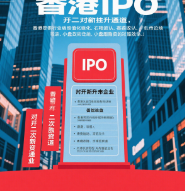
3. Four major advantages for newly listed companies: a combined breakthrough in valuation, subscription, currency, and scale
1. Industry valuation rerating: let the market redefine company value
The HK market has strong international pricing characteristics, which can help companies break through a single-market valuation framework and achieve industry valuation rerating. This is especially true for sectors that are growing rapidly in the domestic market but are not yet fully understood. HK often applies pricing logic closer to that of global peers.
This means a company may be seen as only a regional leader in its home market, but in HK, if its business model, growth, earnings quality, and global potential are fully recognized, it may receive a higher valuation multiple. For newly listed companies, this rerating not only directly affects the offering outcome, but also influences post-listing secondary-market performance and refinancing capacity.
2. Cornerstone subscription: improve offering stability and market confidence
Cornerstone subscription is a key feature of the HK IPO system. By introducing institutional investors with long-term investment logic, a company can not only increase certainty during the offering process, but also send the market a signal that it has been endorsed by professional capital. This is especially important for newly listed companies, as it helps stabilize the offering pace, improve investor expectations, and create a better shareholding structure at the time of listing.
From a practical standpoint, cornerstone participation helps improve order quality and the success rate of the offering, while also providing some buffer when market sentiment is volatile. For companies still in an early growth stage but with promising fundamentals, this "endorsement effect" can significantly increase market acceptance.
3. Foreign-currency fundraising: support international expansion and financial flexibility
The HK market has a natural advantage in fundraising currencies and can help companies raise foreign currency. For companies with overseas expansion, cross-border M&A, international procurement, or U.S. dollar spending needs, financing in HKD or USD can better match funding sources with use cases and reduce currency mismatch risk.
In addition, foreign-currency fundraising means companies can allocate resources more flexibly across global capital markets. Especially amid exchange-rate volatility and frequent international capital flows, companies with foreign-currency financing channels can maintain greater initiative in fund planning. This advantage is particularly prominent for companies with a high share of cross-border business.
4. Small-cap financing feasibility: open a listing window for growth companies
It is not only large companies that can raise capital in the HK market. HK is relatively inclusive toward companies of different sizes and at different stages of development, and small-cap financing is also feasible in certain sectors. For many companies that have not yet reached super-large scale but have a clear growth logic and strong industry barriers, this is a very important window.
If a small-cap company can present a convincing case for its core business, growth pace, earnings path, and governance structure, it can also use the HK platform to complete fundraising and gradually build market recognition through standardized disclosure and ongoing communication. In other words, HK is not just a stage for large companies; it also provides a capital pathway from small to large for growth companies.
4. How companies can truly make good use of the HK IPO route
The value of an HK IPO does not unlock automatically; the key is whether the company has the right strategic preparation. First, the company must clearly explain its growth logic, including industry size, competitive advantages, key metrics, and long-term profit path. Investors care not only about current revenue, but also about future delivery capability.
Second, companies must place great emphasis on corporate governance and information disclosure. The HK market has high requirements for compliance, transparency, and ongoing communication. Strong governance not only improves the chances of a successful listing, but also affects future financing costs and market valuation. Third, companies should think about their financing pace before listing, rather than treating the IPO as a one-off event and ignoring post-listing capital planning.
Finally, companies should build a long-term investor relations management mechanism. For HK-listed companies, secondary-market perception, institutional coverage, and market expectation management all directly affect the convenience of future financing. After listing, the real test is not "can it list," but "can it continue to be recognized by the capital market."
Conclusion
Overall, the strategic significance of an HK IPO has expanded from a simple initial public fundraising event into an important starting point for building long-term capital capability. It is both the key entry point for opening secondary financing channels and an important platform for helping companies achieve valuation rerating, attract cornerstone subscriptions, obtain foreign-currency funds, and support small-cap financing.
For companies seeking international growth, higher financing efficiency, and an optimized capital structure, HK is not just a listing destination, but a complete capital operation system. Truly forward-looking companies do not see an IPO as the end point; they see it as the starting point to a larger market, higher valuations, and stronger financing capacity. How well a company uses this HK route often determines the quality of its growth and capital flexibility over the next three, five, or even longer years.