Comprehensive Analysis of Hong Kong Market on October's First Trading Day
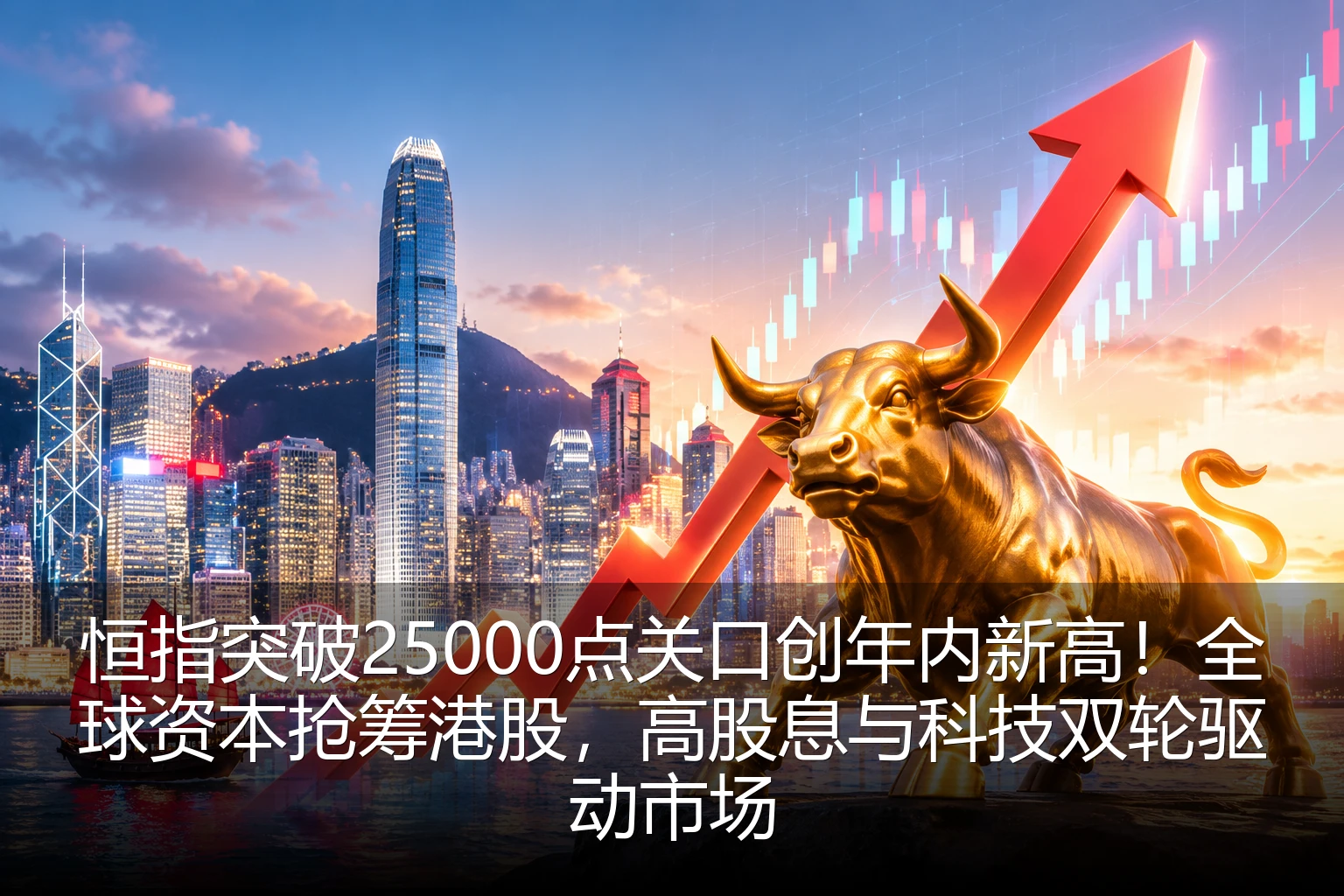
The Hong Kong market in early October 2026 exhibited typical "golden September, silver October" characteristics, with market sentiment clearly warming up after the volatile adjustment in September. The Hang Seng Index opened with a gap and maintained an upward trend throughout the day, ultimately closing up 1.2% at 31,085 points, successfully holding above the 31,000-point level. This trend not only verified market optimism for October but also reflected investors' renewed active positioning in the Hong Kong market after cautious observation at the end of September.
Market Opening and Full-Day Trend Analysis
On October's first trading day, the Hong Kong market showed strong momentum from the opening, with the Hang Seng Index opening at 30,890 points, up 215 points or 0.7% from the previous close. After opening, the market surged quickly, reaching a high of 31,120 points, but was later pressured by profit-taking, pulling back to around 30,900 points. In the afternoon, as market confidence gradually recovered, the index rose again, accelerating in late trading to close at 31,085 points. The daily trading volume reached 98 billion Hong Kong dollars, significantly higher than the previous day.
In terms of sector performance, tech stocks and high-dividend sectors emerged as dual drivers leading the market upward. The Hang Seng Tech Index closed up 1.8%, outperforming the broader market, while the Hang Seng High Dividend Index also gained 1.1%, indicating that while risk appetite increased, capital still favored assets with certainty. This "barbell" allocation structure reflects that the current market is in a critical period of style transition, with investors pursuing growth while also valuing the stability of dividend returns.
Southbound Capital Flow Analysis: Logic Behind Continuous Inflows
On October's first trading day, southbound capital through the Hong Kong Connect program net flowed into the Hong Kong market by 8.5 billion Hong Kong dollars, maintaining a net inflow for the seventh consecutive trading day. This data not only continued the September capital inflow trend but also reinforced Hong Kong's status as an important channel for mainland investors' asset allocation.
In terms of capital flow structure, southbound capital mainly flowed into two directions: first, tech leaders, especially leading enterprises in artificial intelligence, cloud computing, and new energy sectors; second, high-dividend, low-valuation traditional industry leaders such as financial, energy, and utility sectors. This "dual-track" capital allocation strategy reflects mainland investors' investment philosophy of pursuing growth while emphasizing safety margins in the current market environment.
Notably, the concentration of southbound capital holdings in Hong Kong Connect标的 increased, with the top 10 traded accounting for 42% of the total, up 5 percentage points from the previous day. This change indicates that as market volatility increases, mainland investors are more inclined to allocate to liquid, fundamentally strong large-cap stocks to reduce overall portfolio risk.
Analysis of Tech and High-Dividend Sector Rotation Logic
During the intraday trading on October's first day, tech stocks and high-dividend sectors showed clear rotation characteristics, reflecting not only market style shifts but also underlying investment logic.
The tech sector's rise was mainly driven by three factors: first, global tech giants successively released optimistic quarterly earnings, with AI-related companies exceeding expectations, boosting valuations across the tech sector; second, breakthroughs by Chinese tech giants in AI gained international recognition, with related stocks continuing to rise; finally, increased policy support for technological innovation, with continuous policy dividends released in key areas like semiconductors and artificial intelligence.
Meanwhile, the strength of high-dividend sectors stemmed from rising risk aversion. Against the backdrop of increasing global economic uncertainty, investors favored value stocks with stable cash flows, high dividend yields, and low valuations. Traditional industry leaders in finance, energy, and utilities became preferred safe havens due to their stable profitability and high dividend yields.
This "tech + high-dividend" dual-theme strategy actually reflects a balanced market approach: pursuing growth while emphasizing safety margins. For investors, this allocation structure can capture market upside opportunities while controlling risks, making it an ideal choice in the current volatile market.
Market Sentiment Indicator Interpretation: Optimism Gradually Returning
Market sentiment indicators on October's first trading day showed a clear improvement from the previous day. Specifically, the Hang Seng Market Sentiment Index rose from yesterday's 58 points to 65 points, approaching the optimistic 70-point range, indicating that overall market sentiment is shifting from cautious to optimistic.
Looking at sub-indicators, the Investor Confidence Index rose from 52 to 61 points, the Market Volatility Expectation Index fell from 65 to 58 points, and the Risk Preference Index rose from 48 to 55 points. These changes collectively show that as the market stabilizes and rebounds, investor confidence in the outlook is gradually recovering, with risk appetite also increasing.
However, it's worth noting that despite the improvement in market sentiment, it remains in a neutral-to-optimistic range, not yet reaching extremely optimistic levels. This relatively cautious sentiment state is actually conducive to healthy market functioning, avoiding bubble risks from excessive optimism.
In-depth Analysis of Hong Kong Connect Capital Flows
On October's first trading day, Hong Kong Connect capital flows showed distinct structural characteristics. In terms of flow direction, southbound capital net flowed in by 8.5 billion Hong Kong dollars, while northbound capital net flowed out by 1.2 billion Hong Kong dollars, showing a pattern dominated by southbound flows.
In terms of sector distribution, southbound capital mainly flowed into tech, consumer, and financial sectors, with net inflows of 3.5 billion, 2.2 billion, and 1.8 billion Hong Kong dollars respectively. Northbound capital mainly flowed out of tech and consumer sectors, with net outflows of 800 million and 500 million Hong Kong dollars. This difference in capital flows reflects the divergence between mainland and overseas investors' allocations in the Hong Kong market: mainland investors are more optimistic about the long-term value of Hong Kong stocks, while overseas investors remain relatively cautious.
At the individual stock level, tech giants like Tencent, Alibaba, and Meituan received significant southbound net buying, while high-dividend stocks like China Mobile, CNOOC, and China Shenhua also attracted capital favor. This "growth + value" dual allocation strategy further confirms the rationality of the current "barbell" allocation structure.
Trading Strategy Recommendations: Seizing Dual-Theme Rotation Opportunities
Based on market performance on October's first trading day, we offer the following trading strategy recommendations for different types of investors:
- For conservative investors: Focus on high-dividend, low-valuation traditional industry leaders such as financial, energy, and utility sectors. These stocks offer stable profitability and high dividend yields, providing relatively stable returns during market volatility.
- For growth-oriented investors: Focus on leading enterprises in technological innovation, especially high-growth sectors like artificial intelligence, cloud computing, and new energy. These stocks have significant growth potential and can generate excess returns during market rebounds.
- For balanced investors: Adopt a "barbell" allocation strategy, simultaneously allocating to tech leaders and high-dividend value stocks to balance risk and return, and capture market rotation opportunities.
In terms of position management, investors are advised to maintain moderate positions without being overly aggressive. Considering the market is still in a volatile phase, it's recommended to keep overall positions between 60%-80%, leaving some cash reserves for adding positions during market corrections.
Outlook: October Market Looks Promising
Looking ahead to October, the Hong Kong market is expected to continue the "golden September, silver October" trend. From a macro perspective, the global economic recovery is proceeding well, with PMI data of major economies continuously improving, providing a favorable external environment for the Hong Kong market. From a policy perspective, mainland China continues to introduce measures supporting the healthy development of the capital market, providing policy support for Hong Kong. From a liquidity perspective, continuous southbound inflows provide ample liquidity to the Hong Kong market.
However, investors should also pay attention to potential risk factors: first, rising global inflation may lead to monetary policy shifts by major central banks; second, escalating geopolitical risks may affect market risk appetite; third, after a certain degree of valuation recovery, the Hong Kong market may face some callback pressure.
Overall, the Hong Kong market is expected to maintain an upward trend with fluctuations in October, with tech and high-dividend dual themes continuing to lead market rotation. Investors should closely monitor changes in capital flows, seize market rotation opportunities, while controlling positions and managing risks effectively.
In terms of specific operations, investors are advised to focus on the following directions: first, leading enterprises in technological innovation, especially high-growth sectors like artificial intelligence, cloud computing, and new energy; second, high-dividend, low-valuation traditional industry leaders such as financial, energy, and utility sectors; third, consumer and service sector leaders benefiting from mainland economic recovery. These sectors are expected to perform well in October, bringing good returns to investors.
In conclusion, the market performance on October's first trading day has set a positive tone for the entire month. With market sentiment warming up and continuous capital inflows, the Hong Kong market is poised for a promising rally. Investors should maintain an optimistic attitude while implementing risk controls, seizing market rotation opportunities to achieve investment goals.