Against the backdrop of continuously evolving global financial market dynamics, the Hong Kong market, as an important bridge between mainland China and international capital markets, has always been a focal point for investors regarding its capital flow trends. Particularly, Hong Kong Connect fund flows, as a key channel connecting mainland and Hong Kong markets, not only reflect mainland investors' allocation preferences for Hong Kong assets but also indicate future market direction. This article will conduct an in-depth analysis of the latest trends in Hong Kong Connect fund flows, explore the underlying market logic, and provide practical investment strategy references for investors.
\n\nAnalysis of Current Hong Kong Connect Fund Flows
\n\nAs of August 2026, Hong Kong Connect funds continue to show a net inflow trend, which has persisted for several months. Data shows that in the past month, the average daily net inflow of Hong Kong Connect funds has stabilized at tens of billions of Hong Kong dollars, with cumulative net inflows exceeding the trillion Hong Kong dollar mark. This data not only sets a recent high but also indicates sustained enthusiasm among mainland investors for allocating to Hong Kong assets.
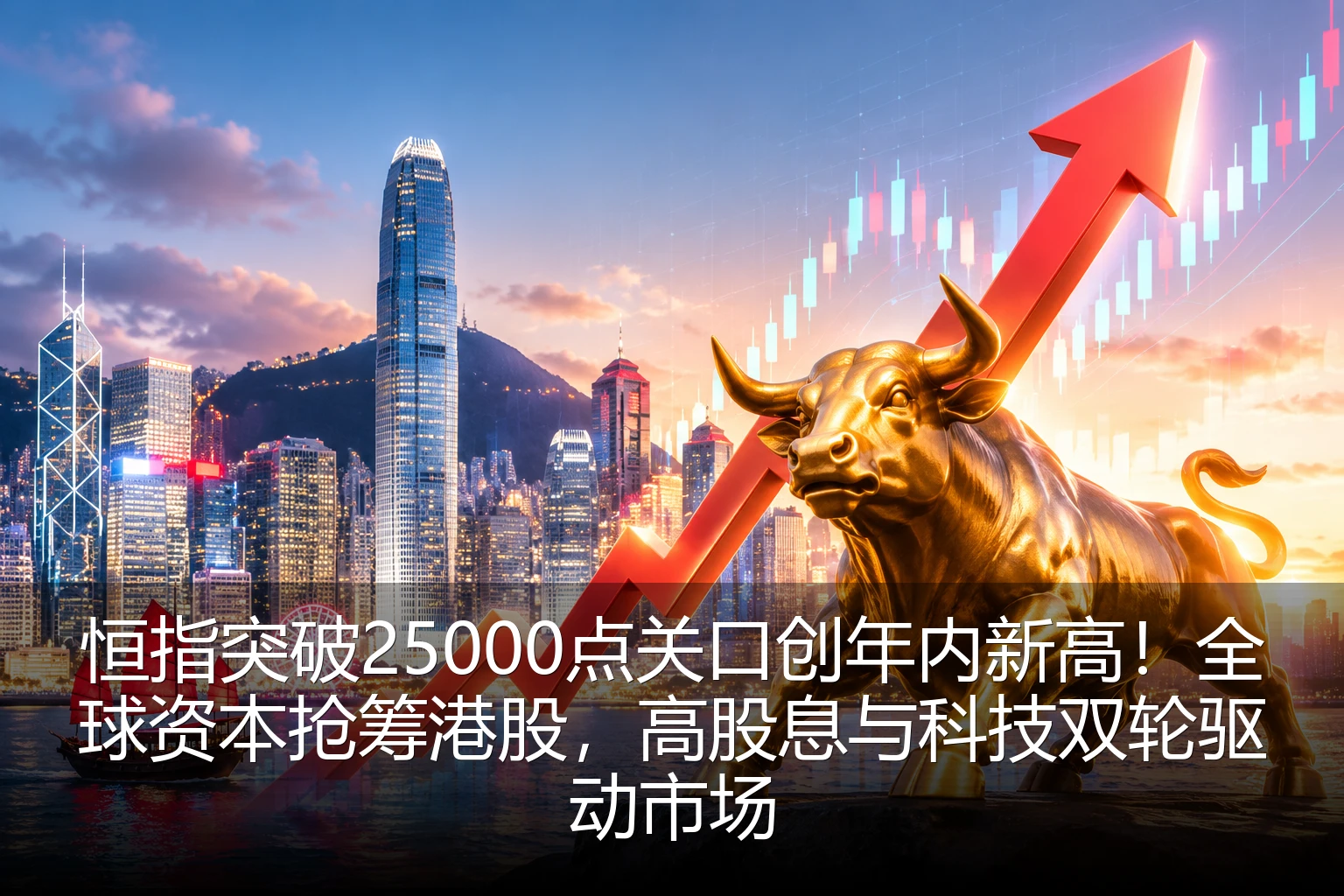
\n\nIn terms of market performance, the continuous inflow of Hong Kong Connect funds shows a clear positive correlation with the Hang Seng Index's movement. With the ongoing influx of Southbound funds, the Hang Seng Index has steadily recovered from its low point at the beginning of the year, now approaching 28,000 points, an increase of over 15% from its low point. This trend demonstrates that Hong Kong Connect funds have become a significant driving force behind the Hong Kong market's upward movement.
\n\nNotably, the inflow structure of Hong Kong Connect funds has also undergone significant changes. Previously, Hong Kong Connect funds were mainly concentrated in traditional value sectors such as finance and real estate. Recently, the allocation proportion of growth-oriented sectors like technology, consumer goods, and healthcare has increased significantly. This change reflects adjustments in mainland investors' allocation strategies for Hong Kong assets and预示着 a shift in investment style in the Hong Kong market.
\n\nDriving Factors Behind Southbound Investment Inflows
\n\nThere are multiple driving factors behind the continuous inflow of Southbound funds into the Hong Kong market. First, the valuation advantage of Hong Kong stocks is an important factor attracting capital inflows. Compared with major global markets, the average valuation of Hong Kong stocks, particularly Hang Seng Index components, remains at relatively low levels, offering high investment attractiveness. Especially against the backdrop of sustained mainland economic recovery and improved corporate earnings, Hong Kong's valuation advantage is even more pronounced.
\n\nSecond, the trend of the RMB exchange rate is also an important factor affecting Southbound fund flows. Recently, the RMB exchange rate has shown a stable upward trend, which not only reduces exchange rate risks for mainland investors but also enhances the relative attractiveness of Hong Kong assets. For mainland investors holding RMB, investing in Hong Kong stocks is equivalent to gaining additional exchange rate returns.
\n\nThird, improvements in the policy environment have also had a positive impact on the Hong Kong market. In recent years, the Hong Kong SAR government has continuously introduced a series of policies to attract international capital, including optimizing listing systems, reducing transaction costs, and strengthening market infrastructure. These measures have not only enhanced Hong Kong's international competitiveness but also provided a more convenient investment environment for mainland investors.
\n\nAdditionally, global asset allocation demand is also an important factor driving Southbound investment inflows. Against the backdrop of high valuations and increased volatility in major global markets, Hong Kong, as a global valuation low point, has attracted increasing attention from international capital. Through the Hong Kong Connect channel, mainland investors can more conveniently participate in this global asset allocation trend.
\n\nRelationship Between Hong Kong Connect Fund Flows and Market Performance
\n\nHistorical data shows a close correlation between Hong Kong Connect fund flows and market performance. Generally, when Hong Kong Connect funds show continuous net inflows, the Hong Kong market tends to perform well; when fund flows reverse, the market often faces adjustment pressure. This pattern has been verified multiple times in recent market movements.
\n\nFrom a mechanism perspective, Hong Kong Connect fund flows affect market performance through several channels: first, the direct capital push effect, where large inflows directly enhance market liquidity and push stock prices up; second, the sentiment transmission effect, where continuous Southbound inflows boost market confidence and attract more investors; third, the structural optimization effect, where changes in fund flows often signal market structural adjustments, guiding capital toward quality stocks.
\n\nIt's worth noting that the relationship between Hong Kong Connect fund flows and market performance is not simply linear but is influenced by multiple factors. For example, during significant global market volatility, even with continuous Hong Kong Connect inflows, the Hong Kong market may perform poorly due to external shocks. Therefore, when analyzing Hong Kong Connect fund trends, investors need to make comprehensive judgments considering global market conditions, policy changes, and other factors.
\n\nDifferences in Fund Flows Across Sectors
\n\nA detailed analysis of Hong Kong Connect fund flows reveals significant differences in capital allocation across sectors. Recently, funds have shown a trend of shifting from traditional value sectors to growth-oriented sectors, reflecting a change in market investment style.
\n\nAmong traditional value sectors, finance, real estate, and energy sectors continue to receive favor from Southbound funds. Particularly, large state-owned banks, insurance stocks, and other targets with stable dividend capabilities continue to receive sustained capital increases. These assets not only have valuation advantages but also provide stable dividend income, offering strong defensiveness in the current market environment.
\n\nIn growth-oriented sectors, fund inflows into technology, consumer goods, and healthcare have accelerated significantly. Especially in emerging fields like artificial intelligence, new energy, and biomedicine, a group of enterprises with core competitiveness have received focused attention from Southbound funds. These companies not only have growth potential but can benefit from China's economic transformation and upgrading, showing prominent long-term investment value.
\n\nAdditionally, Hong Kong Connect fund allocation across different market cap segments shows differentiated characteristics. Large blue-chip stocks remain the focus of capital allocation, but the inflow speed into small and medium-sized growth stocks has accelerated significantly, indicating that mainland investors' understanding of the Hong Kong market is deepening and investment strategies are becoming more diversified.
\n\nInvestment Strategy Recommendations
\n\nBased on the analysis of Hong Kong Connect fund flows, we provide the following investment strategy recommendations for different types of investors:
\n\nFor Long-term Value Investors
\n\nLong-term value investors can focus on quality stocks that continue to receive Southbound fund increases. These companies typically have stable profitability, good cash flow, and reasonable valuation levels. In specific operations, a "core-satellite" strategy can be adopted, allocating most funds to defensive core assets like finance and consumer goods, while appropriately allocating to growth-oriented satellite assets like technology and healthcare.
\n\nFor Growth Investors
\n\nGrowth investors can focus on growth sectors with rapid fund inflows and relatively reasonable valuations. Especially in emerging fields like artificial intelligence, new energy, and biomedicine, a group of enterprises with core competitiveness are worth attention. In specific operations, a combination of "top-down" and "bottom-up" approaches can be used, focusing on industry development trends while conducting in-depth research on company fundamentals.
\n\nFor Tactical Investors
\n\nTactical investors can monitor changes in Hong Kong Connect fund flows to adjust their portfolios in a timely manner. When funds concentrate on a particular sector, it often indicates investment opportunities in that sector; when funds flow out of a sector, it may signal risks. In specific operations, a "momentum strategy" can be adopted to follow fund flows in adjusting positions, but risk control needs to be emphasized to avoid chasing gains and selling at losses.
\n\nRisk Warnings
\n\nAlthough Hong Kong Connect fund flows are an important reference for investment decisions, investors also need to pay attention to the following risk factors:
\n\n- \n
- Policy risks: Adjustments to Hong Kong Connect policies may affect fund flows, and investors need to closely monitor relevant policy changes. \n
- Market risks: The Hong Kong market is highly volatile, and investors need to manage risks effectively, avoiding excessive leverage. \n
- Exchange rate risks: RMB exchange rate fluctuations may affect investment returns, and investors need to monitor exchange rate changes. \n
- Liquidity risks: Some Hong Kong stocks have poor liquidity, and large trades may significantly impact stock prices. \n
- Information asymmetry risks: The Hong Kong market has relatively low information transparency, and investors need to strengthen information gathering and analysis. \n
Conclusion
\n\nHong Kong Connect fund flows are an important window for observing the Hong Kong market, reflecting mainland investors' allocation preferences and confidence levels in Hong Kong assets. Currently, the continuous inflow of Hong Kong Connect funds not only drives the Hong Kong market's upward movement but also预示着 market structural adjustments and shifts in investment style.
\n\nFor investors, monitoring Hong Kong Connect fund flows helps grasp market trends and optimize investment strategies. However, it should be noted that fund flows are only one reference factor in investment decisions. Investors also need to make comprehensive judgments considering multiple factors such as macroeconomic environment, policy changes, and company fundamentals.
\n\nLooking ahead, as the opening up of mainland China's capital market continues to deepen, the scale of Hong Kong Connect funds is expected to expand further, and its impact on the Hong Kong market will become more profound. Investors need to closely monitor changes in fund flows, adjust investment strategies in a timely manner, and seize investment opportunities in the Hong Kong market.