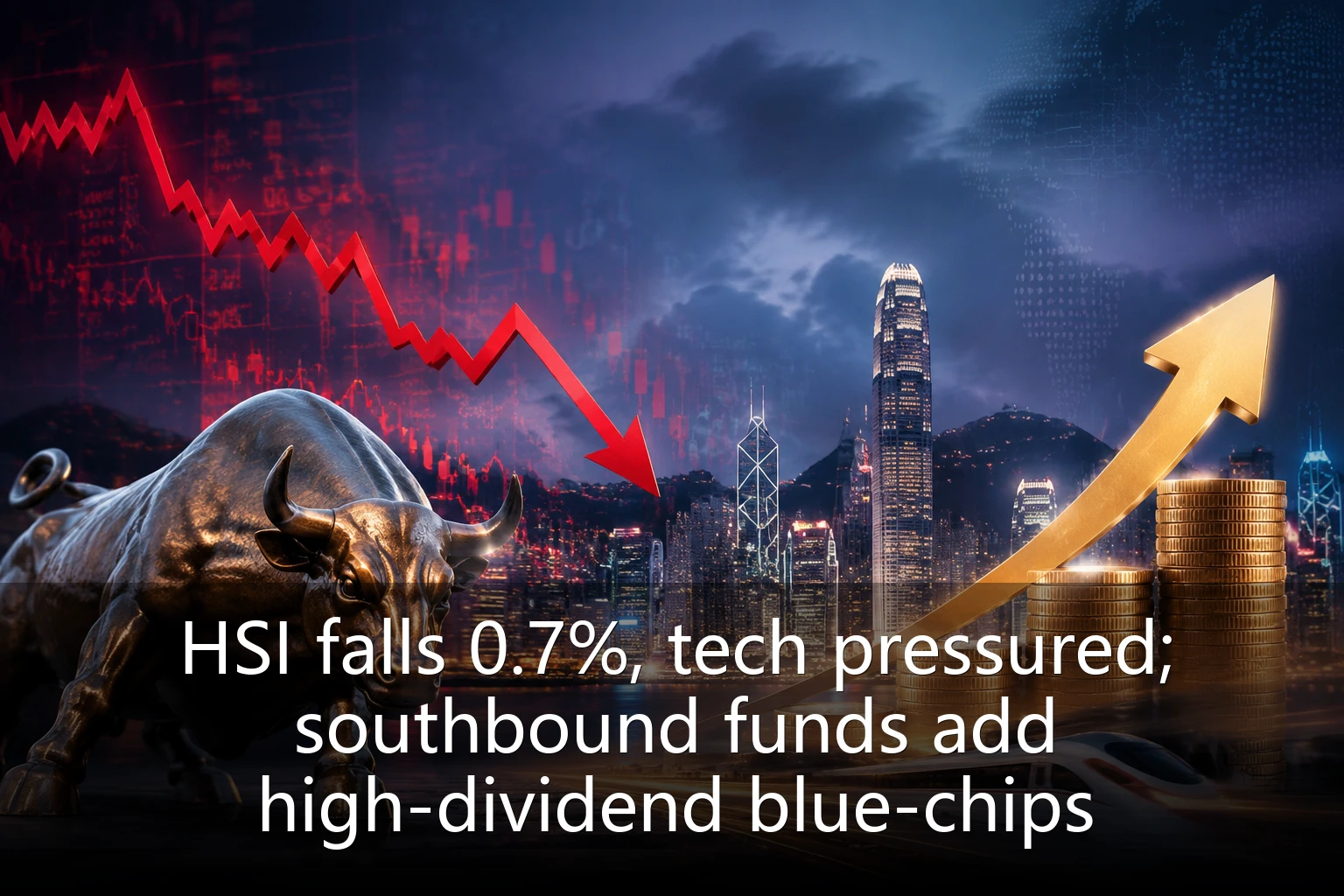
On July 29, 2026, Hong Kong's three major stock indices closed lower. The Hang Seng Index fell throughout the day, finally closing at 18,500, down 0.7%; the H-shares Index fell 0.6%; the Tech Index posted the largest decline, closing down 1.2%. Overall market trading was light, with turnover around HK$105 billion, slightly higher than the previous day. The core drivers today were rising Fed rate hike expectations and weak mainland economic data, which pressured tech stocks, but high-dividend blue-chips and the energy sector bucked the trend to attract capital.
Market Overview: Tech Stocks Drag the Market, Energy Stocks Stand Out
From the market perspective, the Hang Seng Index opened slightly higher in the morning, then fluctuated lower throughout the session, with losses widening in the afternoon, closing near the day's low. The tech sector was the main drag, with over 80% of Hang Seng Tech Index constituents declining. Meituan fell 3.2%, Tencent fell 1.8%, and Alibaba fell 2.1%. Sub-sectors such as semiconductors, software, and internet healthcare led the declines. In contrast, traditional sectors performed strongly. Energy stocks stood out, with PetroChina and Sinopec both rising over 2%, and the coal sector also gained, with China Shenhua Energy up nearly 3%, mainly boosted by stabilizing international oil prices and peak summer electricity demand. Additionally, utilities and telecom services sectors were relatively resilient, reflecting capital's defensive tilt amid market uncertainty.
Capital Flows: Southbound Funds Net Inflow Despite Weak Market, Favor High-Dividend Blue-Chips
Notably, despite the weak market, southbound funds recorded a net inflow of HK$5.28 billion today, marking the fifth consecutive trading day of net buying. The Shanghai-HK and Shenzhen-HK Stock Connect saw inflows of HK$2.85 billion and HK$2.43 billion, respectively. In terms of individual stocks, capital mainly flowed into high-dividend blue-chips such as China Mobile, CNOOC, and ICBC, with daily net purchases exceeding HK$500 million each. Analysts pointed out that against the backdrop of Fed rate hike expectations suppressing growth stock valuations, mainland funds are accelerating their allocation to Hong Kong's high-dividend strategy in search of stable returns. Meanwhile, recent rumors of dividend tax relief for Stock Connect have further catalyzed southbound funds' demand for high-yield targets. On the other hand, foreign capital continued net selling today, with significant pressure on tech stocks, and northbound funds (Hong Kong to mainland) also saw small outflows, indicating foreign investors' cautious stance on the short-term market.
Notable Moves: Multiple Stocks Show Abnormal Activity; Institutions Downgrade Tech Ratings
Several stocks showed abnormal movement today. Bilibili fell 4.5%, hitting a three-month low, on news that the company's gaming business revenue in the first half was below expectations and overseas expansion faced obstacles. Additionally, Xiaomi Corp fell 2.5% on market rumors of potential delays in its car-making business. On the other hand, some financial stocks rose against the trend. HSBC Holdings gained 1.2%, boosted by expectations of a UK rate hike; AIA Group rose 0.8%. On the institutional side, several international investment banks downgraded their short-term ratings on tech stocks such as Tencent and Meituan, citing industry regulatory pressures and slowing earnings growth that could weigh on share prices. However, CICC maintained a neutral-to-optimistic view, believing low valuations provide a margin of safety.
Outlook: Market Sentiment Cautious; Focus on Fed Decision and Mid-Year Report Season
Looking ahead to the short term, Hong Kong stocks still face multiple pressures. The Fed will hold a policy meeting next week, with the market widely expecting a 25-basis-point rate hike. At that time, U.S. Treasury yields and the dollar's movement will affect global capital flows. Additionally, Hong Kong stocks enter the intensive mid-year report disclosure period, where individual earnings divergence may increase volatility. Technically, the 18,500 level for the HSI is a previous bottom area; if it falls below, it may test support at 18,200. Resistance lies in the 18,800–19,000 range. In terms of strategy, investors are advised to maintain a defensive posture, moderately allocate to high-dividend blue-chips and energy/utility stocks, and wait for opportunities to buy tech stocks after risk has been released. Over the medium to long term, the pace of China's economic recovery and policy support remain core variables for Hong Kong stocks.
Today's trading once again confirms the trend of style rotation in the Hong Kong market. In an environment of elevated interest rates and slowing economic growth, high-yield assets with stable earnings and ample cash flow have become capital safe havens. Investors can focus on stocks that southbound funds are consistently buying, such as leading companies in telecommunications, energy, and banking sectors, while being cautious about tech stocks with potential earnings disappointments. Overall, Hong Kong stocks are likely to consolidate with a volatile bias in the short term, but low valuations and ample mainland liquidity provide support from the bottom, making medium- to long-term investment value increasingly apparent.