A Look at Hunan’s IPO Scorecard: Capital Upgrading Behind the Hong Kong Breakthrough
Keywords: Hunan IPO, Hong Kong listing, Beijing Stock Exchange, capital markets, international financing, growth valuation
Introduction
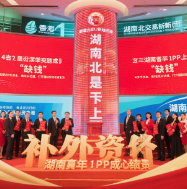
Since 2024, one notable change in Hunan’s capital market has been the reopening of its IPO map. According to public information, Hunan has seen four companies list in Hong Kong and one company list on the Beijing Stock Exchange this year. What stands out is not just the number of listings, but the breakthrough expansion of the Hong Kong route. This means Hunan companies are gradually moving away from the relatively single domestic-listing logic of the past and toward a financing system that is more international, market-oriented, and diversified.
For many outside observers, a Hong Kong listing is most often seen as simply “raising money.” But if you look at the trend of overseas financing and cross-market listings in recent years, fundraising has never been the only goal. For more and more companies in a growth phase, the deeper value of a Hong Kong listing lies in three things: adding foreign-currency capital, shifting to growth valuation, and opening access to international investor pools. These three layers are becoming an important sign of Hunan companies moving into higher-tier capital markets.
1. From a single breakthrough to channel expansion: what Hunan’s IPO signal means
The most striking part of Hunan’s IPO record this year is not “how many companies listed,” but “where they listed.” In the past, many local companies relied mainly on the A-share system, and Hong Kong was often seen only as a supplementary option by a small number of leading firms. This year, however, four Hunan companies listed in Hong Kong, showing that local firms’ understanding of the capital market has clearly upgraded: they are no longer simply pursuing a listing result, but are paying more attention to listing venue, financing structure, investor mix, and valuation mechanism.
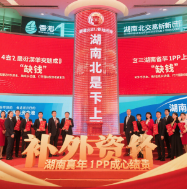
From a regional economic perspective, the expansion of the Hong Kong route sends at least three positive signals. First, the industrial base and operating quality of Hunan companies are being recognized by a broader market, especially those with scale, technology advantages, or international potential. Second, Hunan’s local intermediary services, listing training, and corporate governance capabilities are improving, providing more mature support for companies going to Hong Kong. Third, a smoother Hong Kong route means Hunan’s capital market ecosystem is no longer limited to a local “financing-expansion” model, but is gradually connecting to a wider global capital flow system.
2. Why choose Hong Kong: not because of a lack of cash, but because it is a different way to grow
In the Hong Kong market, companies’ financing motives are often simplified as “needing money.” But from the perspective of a company’s real development stage, the reasons for choosing Hong Kong are usually more strategic.
1. Add foreign-currency capital to support global expansion
For companies with overseas business, cross-border procurement, international R&D, or overseas M&A needs, foreign-currency funds are not just a financial tool; they are an operating tool. Hong Kong financing can give companies access to a certain amount of foreign-currency resources, reduce the mismatch between RMB assets and foreign-currency liabilities in cross-border operations, and help improve resilience to international market volatility.
Especially as global supply chains are being reshaped, more and more Hunan companies are no longer satisfied with local market expansion and are moving into overseas supply chains, overseas sales networks, and international brand building. The foreign-currency capital raised in Hong Kong is effectively ammunition for that global expansion.
2. Switch to growth valuation and obtain more suitable pricing for development
Unlike mature companies, which are judged more by earnings stability, the Hong Kong market uses a more flexible valuation logic for growth, innovation, and international exposure. For companies still in an expansion, investment, or technology-commercialization phase, this valuation framework is sometimes more suitable than a pure profit-based approach.
That is why many fast-growing firms are willing to choose Hong Kong: it not only helps them raise funds now, but also allows the market to recognize their future value earlier. In other words, Hong Kong is not just about “selling shares”; it helps companies turn growth expectations into capital prices ahead of time. For Hunan companies that want to gain an early edge in the industry cycle, this valuation shift is highly attractive.
3. Open access to international investors and strengthen capital-market influence
One of Hong Kong’s key advantages is its natural connection to international capital. Once a company lists in Hong Kong, it is no longer facing only domestic investors; it enters a more international funding pool. Overseas sovereign funds, global asset managers, and cross-border long-term capital are all important participants in the Hong Kong market.
That means companies gain not only a financing channel, but also broader market recognition and branding opportunities. For Hunan companies, this kind of international investor validation has a multiplier effect: on the one hand, it helps improve governance, disclosure, and operational standards; on the other hand, it can build stronger capital credibility for future M&A, refinancing, and overseas expansion.
3. The deeper value of a Hong Kong listing: from corporate financing to regional industrial upgrading
The breakthrough in the Hong Kong route should not be understood only as the listing success of a few companies; it should also be viewed in the context of Hunan’s industrial upgrading. Every expansion in the capital market is, in essence, reshaping regional resource allocation.
First, a Hong Kong listing can push companies to improve governance structures. Compared with many domestic growth companies, Hong Kong has more international requirements for disclosure, internal controls, and compliance systems. During the listing process, roadshows, and ongoing regulation, companies are pushed to standardize finance, optimize organizational structures, and clarify strategy. These changes ultimately feed back into operating quality.
Second, Hong Kong listings help form a positive cycle of “industry-capital-talent.” Once a company uses capital markets to raise funds for expansion, it can increase R&D investment, build production bases, and attract top talent, thereby enhancing industrial competitiveness. For a region like Hunan, which has a manufacturing foundation and is accelerating the layout of emerging industries, the capital market is not just a source of funds, but an accelerator of industrial leapfrogging.
Third, a breakthrough in Hong Kong helps strengthen Hunan’s visibility in the national capital map. For a long time, local IPO performance has been not only a competition in company numbers, but also a comprehensive reflection of regional business environment, industrial quality, and capital service capability. Four Hong Kong listings and one Beijing Stock Exchange listing mean Hunan is shifting from “project cultivation” to “capital output,” which is a positive sign for its regional image and investment attraction.
4. From listing fever to strong listings, Hunan still needs to build key capabilities
Of course, more Hong Kong listings do not automatically mean a full improvement in capital-market quality. What truly determines a region’s capital competitiveness is not one year’s result, but whether it can form a continuous, stable, and repeatable pipeline of listings.
To turn this year’s breakthrough into a long-term advantage, Hunan still needs to keep improving in several areas. First, it should further improve the company cultivation mechanism for listings, especially tiered guidance for tech, manufacturing, and service firms, creating a closed loop from “finding companies” to “nurturing companies” to “delivering listed firms.” Second, it should strengthen cross-border capital awareness and help companies understand Hong Kong market rules, international financial standards, and investor communication earlier, reducing institutional friction at the final stage. Third, it should encourage more companies with overseas expansion capabilities, high R&D spending, and a larger share of international business to choose Hong Kong proactively, improving the match between listings and industrial strategy.
More importantly, local governments, industrial parks, intermediaries, and leading enterprises should jointly build a more mature capital-market ecosystem: listing should no longer be a sprint for a few companies, but a natural result in the growth path of more high-quality firms. Only when capital markets and industrial development truly move in step can the expansion of listing channels be turned into long-term regional competitiveness.
Conclusion
Overall, Hunan’s IPO performance this year sends a clear signal: the Hong Kong route is becoming an important incremental space for local companies to become capitalized. Four Hong Kong listings and one Beijing Stock Exchange listing are not just a record, but a roadmap for regional capital upgrading.
At a deeper level, companies pursue Hong Kong listings not simply to “raise cash,” but to achieve foreign-currency capital replenishment, growth-valuation restructuring, and connection with international capital through the capital market. This means Hunan companies are learning to understand, use, and manage capital in a more open way. Looking ahead, as more quality companies enter multi-tier capital markets, Hunan is well positioned to build a stronger combined advantage in industrial upgrading, international expansion, and capital ecosystem development.