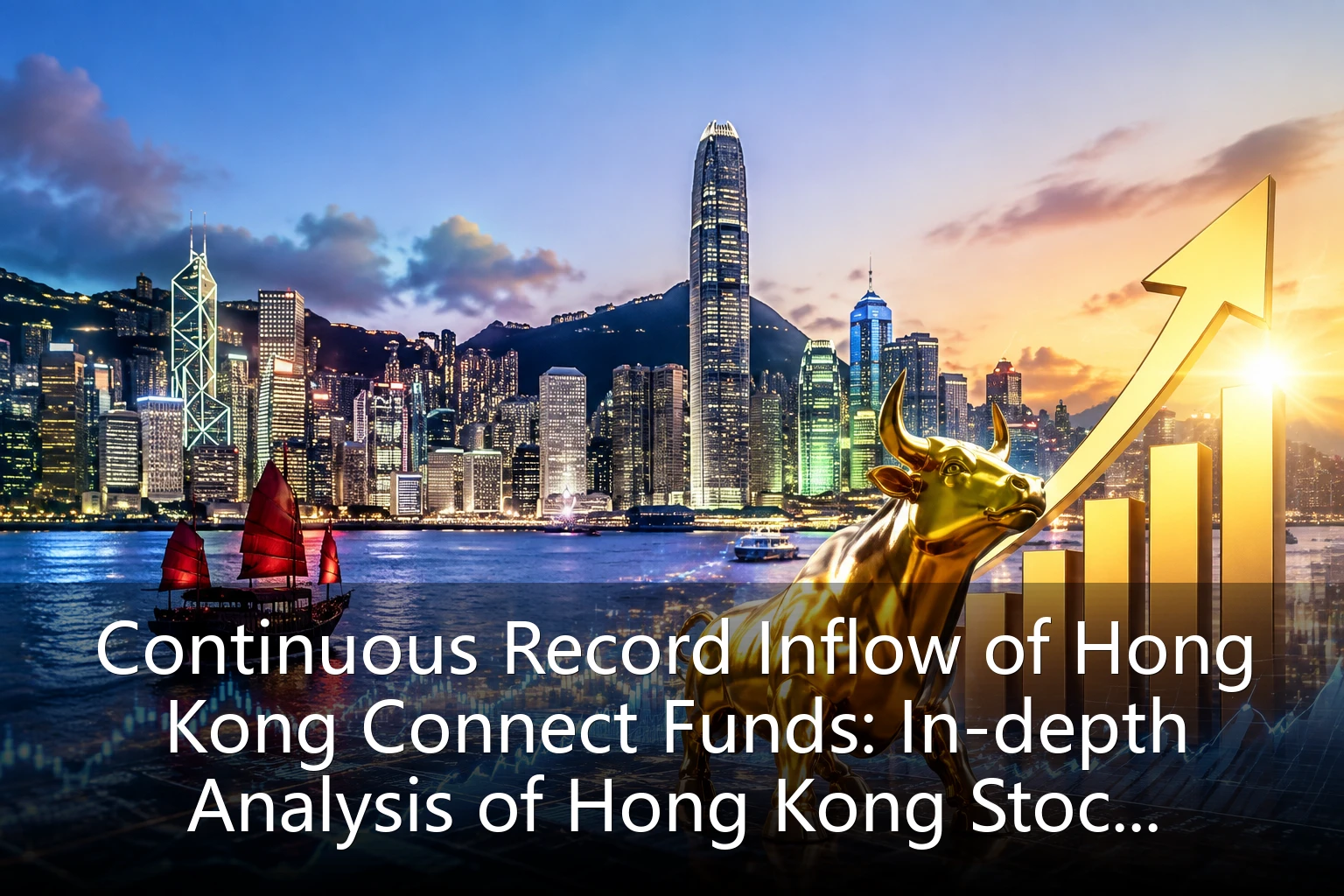
On August 4, 2026, the Hong Kong stock market witnessed a historic moment. After opening high, the Hang Seng Index trended upward steadily, breaking the 25,000-point mark. It not only hit a new yearly high but also fully recovered the losses from the second half of 2025. At close, the HSI surged nearly 2%, with a full-day turnover exceeding 200 billion HKD, showing extremely active market sentiment. Faced with this magnificent rally, many investors ask: why are global capitals simultaneously targeting the Hong Kong stock market now? For ordinary investors, is it still a golden window to trade HK stocks?
Three Core Logics Supporting HSI's Breakthrough of 25,000 Points
This breakthrough is no accident, but the result of macro, capital, and sentiment resonance. Based on the latest market dynamics, the core logics driving this round are:
- Rising expectations of Fed policy pivot: Recent US inflation data continues to fall, and manufacturing PMI shows weakness, heating up market expectations of substantial rate cuts by the Fed in H2 2026. Loose liquidity expectations directly improve the valuation environment for global risk assets, with Hong Kong, as an offshore financial center, benefiting first.
- RMB exchange rate stabilizing and rebounding: With domestic pro-economy policies taking effect, the RMB exchange rate shows strong resilience. Stability reduces exchange risks for foreign investors and boosts Southbound capital's confidence in RMB-denominated assets.
- Interim earnings season preheating with surprises: In August, HK stocks enter a dense interim earnings disclosure period. Based on forecasts, internet giants and energy SOEs show strong profitability, attracting early bargain-hunting funds.
Southbound and Foreign Capital Resonance, Liquidity Premium Accelerating Disappearance
Capital flow is the touchstone of market trends. Behind the HSI breaking 25,000, the resonance between Southbound capital via Stock Connect and international capital is particularly striking.
Data shows Southbound capital maintained net inflows of tens of billions for consecutive days. Mainland institutional funds still view HK stocks as a valuation depression. Amid an asset shortage, high-yield, low-valuation HK assets become the preferred base allocation for insurance and public funds. Meanwhile, passive foreign ETF fund flows turned significantly positive. The valuation discount caused by geopolitical factors in recent years is being repriced. As the liquidity premium disappears with continuous capital inflows, the valuation repair rally falls into place.
High Dividends and AI Tech: The Unignorable Barbell Strategy
For investors looking to enter HK stocks or optimize global portfolios, understanding structural opportunities is crucial. In this rally, capital isn't evenly distributed, but revolves around the dual-engine of high dividend defense and AI tech growth.
High Dividend Assets: The Ballast of Investment
With macro uncertainties remaining, HK high dividend sectors (like energy, telecom, finance) show strong downside resistance and yield certainty. HK dividend yields are generally higher than A-share peers, with stable payout intentions. For long-term steady yield seekers, allocating these high dividend blue chips via Stock Connect provides cash flow and exchange gains amid RMB internationalization. This bond-like dividend strategy is essential for trading HK stocks.
AI Tech Giants: The Offensive Weapon of Growth
On the other end, tech growth stocks represented by the Hang Seng TECH Index are the main source of elasticity. With AI tech iterating and commercializing, HK internet giants face a new valuation reshape. Holding massive data and scenarios, AI large models boost ad monetization and open a second growth curve in B-end cloud businesses. Above 25,000, tech stocks' earnings realization is key to further market breakthroughs.
Novices Trading HK Stocks: Seize Opportunities, Beware of Short-Term Volatility
Despite high investment cost-performance, trading HK stocks is not just for chasing returns, but for scientific asset allocation globally. For novices preparing to open accounts and trade, GP Wiki offers these risk alerts and tips:
- Beware of short-term chasing risks: After rapidly breaking 25,000, the HSI needs technical pullback confirmation. Avoid blind chasing; wait for index pullbacks to key moving averages (like 20-day or 60-day) for batch building positions.
- Watch exchange rate volatility: Investing in HK stocks requires considering two-way HKD/RMB exchange rate fluctuations. Though RMB is stable now, overseas macro changes could erode some returns via exchange rates.
- Build a balanced portfolio: Adopt a barbell strategy. Allocate core positions to low-valuation HK dividend ETFs or blue chips for a safety cushion; allocate satellite positions to high-elasticity growth stocks like tech and pharma for excess returns.
Conclusion: HK Stocks Moving from Valuation Depression to Value Highland
This August 2026 breakthrough is not just a repair of prior overselling, but a sign of global capital regaining confidence in Chinese asset fundamentals. From institutional reform to continuous capital flow improvements, the HK market is transforming from a valuation depression to a value highland. For global investors, understanding HK investment logic, grasping the dual main lines of high dividends and AI tech, and allocating assets well at this juncture is undoubtedly the best strategy against future volatility. As the interim earnings season deepens, quality HK stocks with real earnings support will continue to shine.